What We Have Loved
Work That Reconnects #2: Honouring Pain

A second look at the spiral of principles behind the Work That Reconnects. This one is the hard one: the difficult challenging one. Honouring our Pain for the World. It is, perhaps, a little easier if we’ve shared our gratitude first. It leads on, to that exciting third part of the spiral, but we’re simply not allowed to get there without stopping here long enough. So here goes! Make sure you read the Gratitude piece first though. Remember, subscription is free here, though if you want to contribute a little to future pieces, feel free to do so at Ko-Fi. Those who do will get ‘paid’ status on your subscription, whatever you contribute, and 10% goes to South African eco-charities.
‘Honouring our pain for the world’ is the long title this stage of the spiral is given in the Work That Reconnects. Other cultures might just call this grief work, which is the name Joanna Macy originally used. The lengthier name is used for a few reasons these days. One is simply that grief is a scary word in our westernised society. We dare not go there, we must live shiny happy lives forever. The longer title seems to me to approach the matter with deep honesty, without frightening our fragile selves away at first glance. Yet grief is undoubtedly the resulting emotion, the pain we have to stop running away from. If we ignore it, we enter instead the upbeat frozen hell of many a dystopia. From ‘Brave New World’ onwards, authors have catalogued societies where people have numbed themselves out, got trapped in their bubbles of belief, pandered to by a larger monster on the outskirts hoping to inject us with a little more sleeping drug. My own initial approach to this idea was probably launched by Pink Floyd’s ‘The Wall’ and in particular the song ‘Comfortably Numb’ back in the day: “I’ve got thirteen channels of sh*t on the TV to choose from”. We’ve been scrolling for a very long time now, caught in the matrix. And red pills aren’t as cure-all as some people seem to think: they often just send us down other tunnels of outrage, other quests to find the one simple truth that is being withheld from us by ‘them’.
Nothing wrong with outrage at times – there’s a lot of seriously outrageous stuff happening. But we have to be careful, again, that we’re not using it to pre-emptively cover our deep sorrow. And why do we feel sorrow? Because of loss. Sorrow is invariably an emotion connected with things that were different in the past and have changed. Things we have loved. (Ideas we have loved too, that haven’t been realised, after all, in the now. Disappointment leads naturally to sorrow). And the physicality of sorrow is about letting go. Tears fall like leaves. Without a recognised channel, they form pools that stagnate into the western epidemic of depression.
Shadow masculine archetypes tend to avoid acknowledging the pool by staying in the rage, or covering it with addictions. Shadow feminine ones become absorbed in the pool and let it slowly drown the soul. Both are westernised tendencies: we have to look at traditional indigenous societies and healthy spiritual traditions to find the way out, to get the stream moving again. Because grief work is essential. My own practice has included, at times, the Tibetan Buddhist heart meditation, breathing in the pain and suffering, inevitably those painful aspects of life that are closest to me first, and breathing out love towards that. Closest to me first because like the rest of us I have this modern tendency to assume that my own little individual sorrows are what’s driving my grief. But also that human capacity to develop compassion first for what’s in front of me.
In fact, the most profound aspect of tackling sorrow in a collective ritual is to see, hear, and witness the feelings and stories of others relating to the bigger pictures. It’s really common to feel that we can’t actually handle that bigger grief. But at the same time we’re bombarded with it constantly in our media so it’s pretty obviously going to have an impact on our system whether we’re directly impacted or not. Wars, habitat destruction, resource scouring, environmental and social injustices, loss of functional systems in so many areas of life. As the things we love are relentlessly dismantled, destroyed and ploughed under by the forces of the anthropocene, it hurts. And in fact it hurts everyone, but we’re usually too shy to admit it. This is where Honouring becomes so important. We could brush it all aside, as so many people do, or we could find ways to give this pain space to be spoken, to be sung, to be moved and embodied. Indigenous traditions saw this as obvious because they paid more attention to the cycles of the year. Things passed, regularly; things that were loved were then lost. This is grief, fundamentally: a sign that we have loved, that we still love, even as we cannot be connected in the same way to what we’ve loved. Heartbreak is only possible when we’ve allowed our hearts to open. The heart meditation leads us gently towards bigger grief, for the community, the country, the planet and beyond. For all that causes sorrow out there, and it got its name because it allows our hearts to connect through feeling all that.
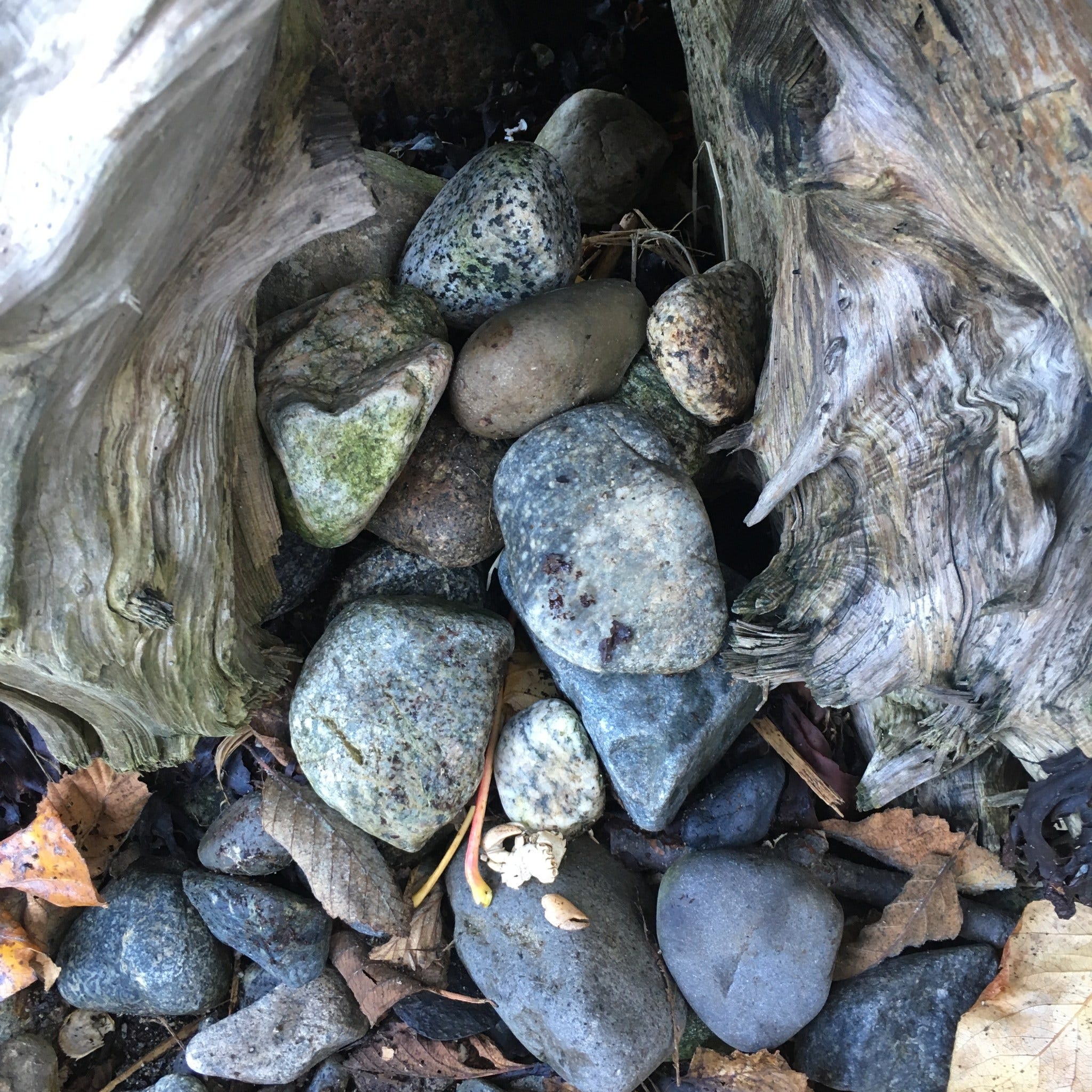
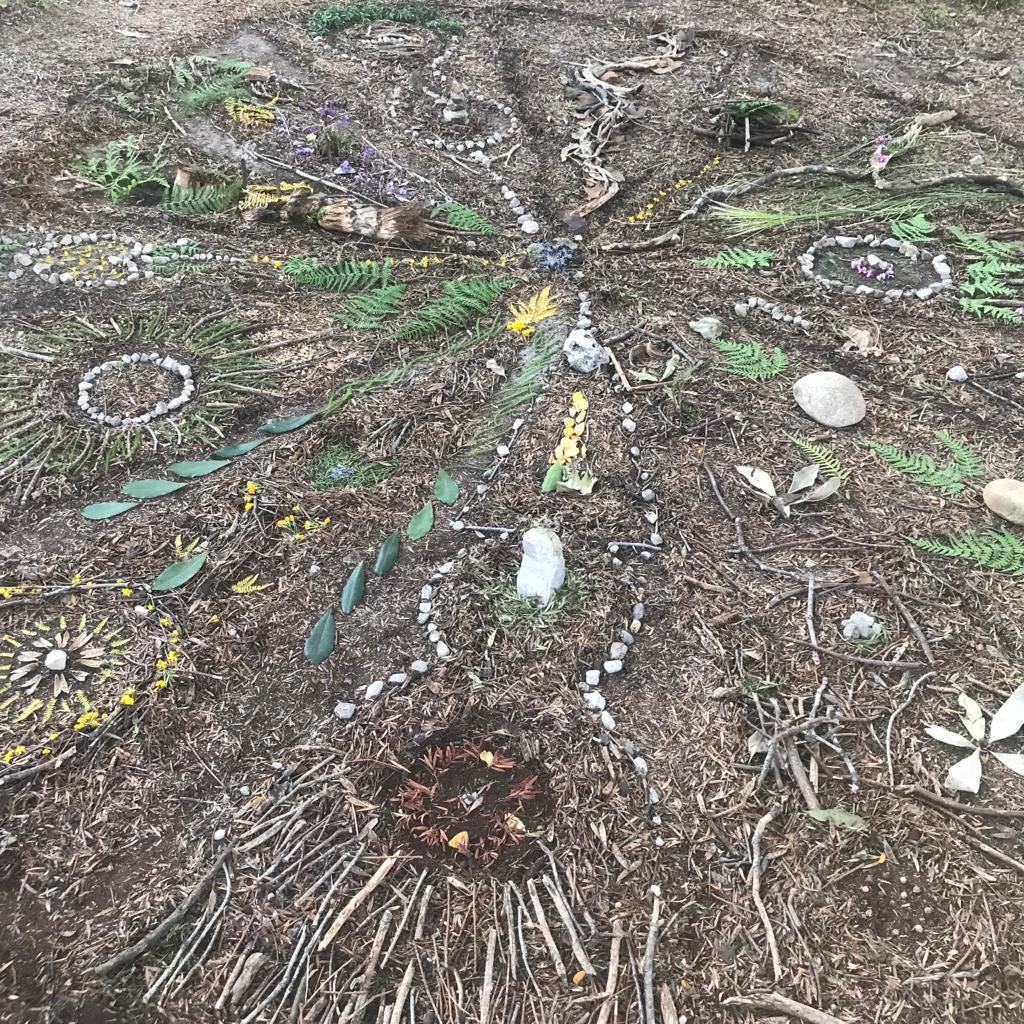
One of the four key principles of happiness, in the end, is this paradoxical allowing of sadness. In its most powerful aspect it is an experience of compassion. In a group, we can have compassion for others and also experience it ourselves, in relation to our own sorrows. We cannot have Active Hope without experiencing this: and the word that springs to mind most easily is truthfulness. There’s a truth about sadness that requires and urges maturity. Little children can be told about loss in fairy tales until a pet or a beloved grandparent passes; teenagers need to hear us acknowledging its existence in a more concrete form, because they’re becoming more accustomed to that deeper sadness themselves, as they are flooded with the emotions of life in a new way. Other indigenous approaches to this pain help us experience loss, letting go of the individual egos we fight so hard to maintain. In my experience, the ultimate holder of the pain is Mother Earth, to whom all our tears descend: always available, always dependable, in spite of what our species continues to do to her. So some of the best ways to get to the truth happen on the ground. In the Work That Reconnects this happens through witnessed processes like the Truth Mandala and the Cairn of Mourning. Taking objects from the local ground - sticks, feathers, leaves, stones - to assist in calling the ritual into physicality. In all the processes I’ve been part of where sorrow has surfaced, it needed seriousness of purpose, moments of stillness, and a settling of energies before the pain could be revealed effectively. And the kinds of protocol that encourage honesty, even around things that might hurt again when they surface.
Rudolf Steiner talks of a range of twelve senses, one of which is the ‘life sense’. This was first introduced to me as the sense of pain: the body signals that something is out of kilter and gives us a real warning we can’t ignore. This happens on both a micro and a macro level: our collective pain is a sign. Because there are two other stages of the spiral to come! So the grief needs to be felt, to encourage us in moving to those stages. Pain, grief, sorrow, these are things that connect us to the base chakra of the soul. An area that our culture deeply tries to avoid, to distract, to numb us from connecting with. Even eastern traditions have tended to avoid it. One spiritual teacher gave me a parable about Indian gurus seeing the energetic state of Western seekers, heading for something new in the 1950s and beyond, and saying to themselves, “OMG! These guys have such messed up lower chakras! Let’s teach them to work with the upper ones, that’ll be much easier to deal with for now”. And so we get the happy clappy all is beautiful version of New Ageism, which has a lot more in common with upbeat Christian Evangelism than many smiling hippies might like to admit, and has led to more recent accusations of spiritual bypassing.
But it also leads, undoubtedly, to the technological quest for outer space. In our imaginations and in indigenous practices, transcending ordinary reality on this planet has always been possible; but the purpose of this was to return with something renewed for this life. (I learnt Transcendental Meditation as a child, and always understood its purpose to be a dipping into something ‘more’ in order to return and operate in the world). Sometimes scientists are questing, like evangelists of various persuasions, for nothing more than a journey of happy escape. For all their claims to be on the cutting edge of knowledge for here, I’m convinced they’re sometimes no different to the just chill man hippies of shiny positivity, the happy faces of the one truth, the busy scrollers. Busily evading the opportunity to find the inner worlds where they might have to face the demons of sorrow. It seems crazy that some people might try to travel a million miles and invest a billion dollars rather than take a breath to feel the heart. But so it is: a very modern disease, allowed to proliferate in multiple forms.
The converse of all this is to see the gold available when we head into the shadows. Which might also sound like trite pseudo-Jungian stuff until we actually experience the power, the liberation, the encouragement that lies at the end of a well-handled container for grief and truth.
Tantra, at least in the Advaita non-dualistic approach I’m most familiar with, took the idea of really exploring our sorrows so we could become more skilled at embodying them, and then transforming them. This is the route to bliss, which can’t just be held in gratitude (a stage we’ve passed and to which we’ll return). The transformation only becomes possible if we have the grounding, the power, the intuitive roadmap to move on. Yet much of tantra as I experienced it was still couched in terms of the individual journey towards transcendental enlightenment, ironically. There are many wonderful people associated with this form of thinking and living; but while they might have had compassion personally, that did not necessarily get expressed as a valuable tool during this dark exploring. Non-dualism sometimes leaps ahead of itself: theoretically, sure, everything is One and all the pain humanity is causing is part of nature and the cosmic plan too. But get to that perspective too fast and you’ve denied real hurts are possible, and you become unable to spiral any further.
And pure individuality is not our future as a species. One of the remarkable things about humans is our capability of operating in intensely complex social structures. It’s a massively important part of our evolution. Community is the key; compassion that goes beyond the individual is central; roots to others are where the connectivity can build, that base, seeing the other’s pain, seeing our own reflected, so that we can know we’re on the same team, ultimately. (And that’s why we need to get the flow going in that base of ours).
Certain Tantrikas are not alone in using speed dial. The temptation is always to get ahead of ourselves. To move beyond this uncomfortable bit before it’s time. With a boundaried process, we can actually dive into this for longer than we might think. I’ve stood in group processes where we’ve lost track of time, and hours have passed, wailing out the muck. There is Work to do. Even if another part of me steps away, sees the man bucketing and recalls that it’s another role I’m Playing. We can skip lightly over this step in the spiral but it’ll keep coming round. Teens can spend years wallowing in it, and in fact we have to help them do so, ideally in a relatively healthy way: and there was I thinking my pseudo-Goth years were so unusual, so misunderstood.
Better to get familiar with the grieving dark, to tell the stories that need telling, to listen to the anguish of others. In such circumstances, the other temptation is to say, “Sorry for you! And yet, I’m not responsible for your pain.” No, perhaps not, even if we’ve really stuffed up on a personal and direct level. But we can take responsibility for our connection to the mistakes of humanity, or for a group we’ve got some relationship to, that’s made large-scale errors, and for shifting that. Every night there’s an opportunity for truth-telling to ourselves as well as individuals: where could we have done better. Of course, that’s so much more appealing if we’ve also looked at that great day we’re grateful for having done good things in. The special trick of the first part of the spiral is right there, as a driver, opening space for more in this area of challenge.
Challenge is good, as much as we can handle it. It stretches us beyond our comfort zone, our numb zone, and only then can we take new steps and learn. Though the other point about this zone of pain is that we have absolutely no idea what to do next. That’s kind of essential. As I’ve shown, I hope, moving too quickly to solutions is how we moderns tend to minimise our interaction with our Pain. Very patriarchal I’m sure. We have to sit with Not Knowing. In this place, I don’t know, any more than you, how on earth we’re going to get out of this mess. It’s too huge to encompass. We’re running out of possibility, and blind faith is something we threw out when Nietzche killed god. That’s not a very satisfactory way to end an article, and it’s not supposed to be. Sitting a little longer with discomfort is very much part of the protocol of this place. It’s the only way to get at the juice that’s here. And it’s tied very much with that story of The Great Unravelling, which is one of the three paradigms we live with consciously within the Work That Reconnects. This paradigm sits alongside the Business As Usual model that had me grab a coffee this morning without checking the organic fair trade locally transported origin. But The Great Unravelling is the scary sibling. We can still switch off the screen to get in touch with it, for all that media mess is what we already sense in our hearts. Take a breath and feel it for a while, a minute or a month. If it gets too much, remember that there are other stages to come in the spiral, and reach out to share your sorrow with another, or many others, and invite them to do so too. That way we get to a bigger Story, that carries us to the next wave of existence.